Dominic Allen, Director.
TIBER directors statement
Director's Statement
Just like the river, memory and art do not abide time.
TIBER grew from my years living and studying in Rome, where I became increasingly drawn to the sense that the city is not silent. History is not behind us. Rome's churches, ruins and sculptures carry the presence of those who made them, history held in stone, form and space. Love is like this. It never leaves us.
I wanted to make a film in which a private grief moves through this world, held not only by memory, but by art, landscape and time.
As an art historian, Marco lives among works that hold agony and transcendence in the same frame. In the opening scene we see Bernini's Ecstasy of Saint Teresa, a nun frozen in marble, caught between bliss and horror, but so alive. I am deeply moved by this contradiction: the way something made of stone can evoke the most overwhelming human feeling. Grief works the same way. What is gone can still be felt. What is past can still be present.
That tension shaped the film formally and emotionally. Marco's journey through Rome, Cortona, Florence and toward the Tiber became a way of exploring how grief can exist alongside beauty, tenderness, ritual and even moments of lightness. Staring at a 600-year-old statue one day. Driving through summer roads with the windows down the next. The sound of water and cicadas. The warmth between a father and daughter. The strange persistence of memory within ordinary life.
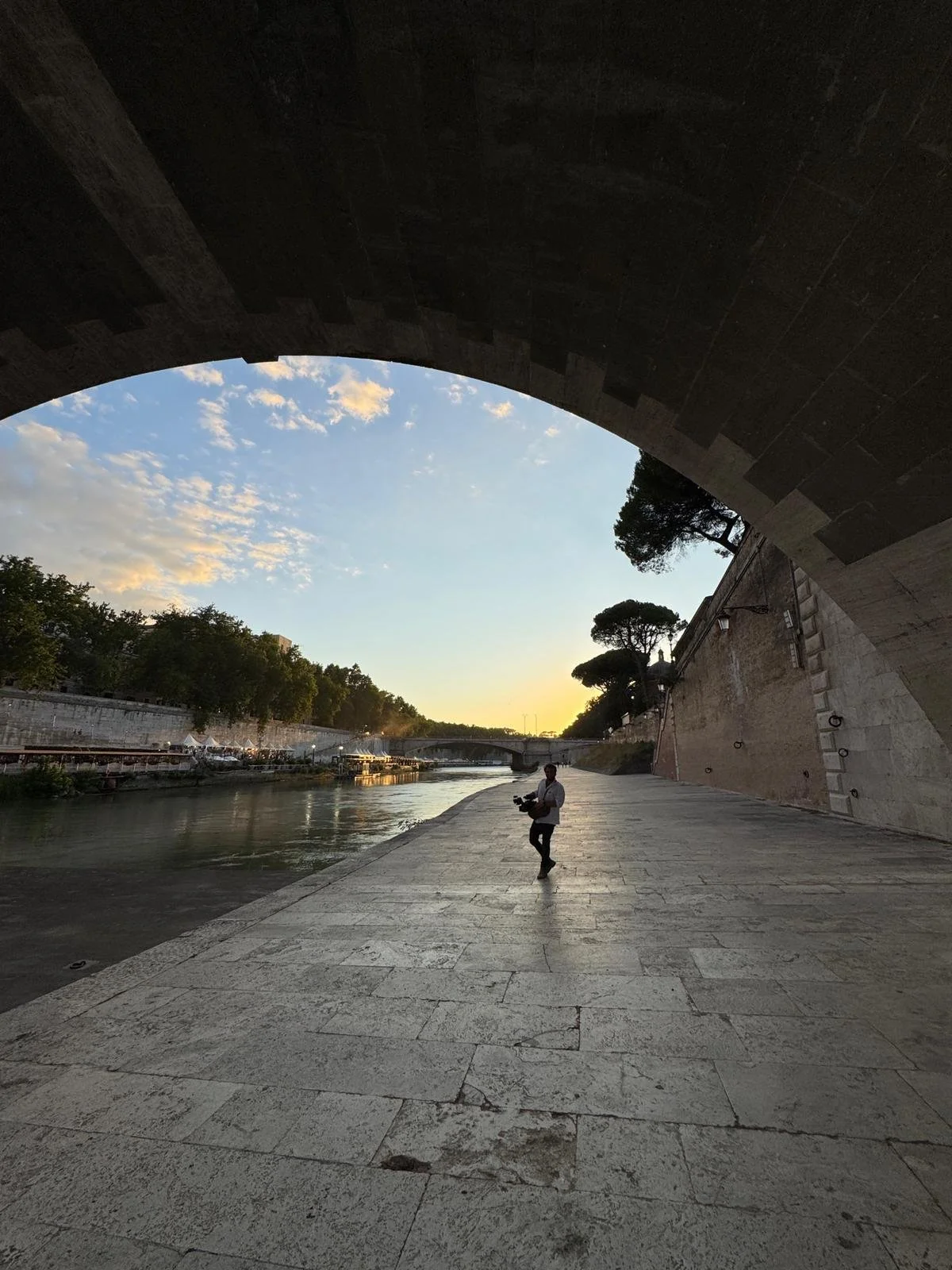
And at the centre of it, the Tiber. A river that witnessed the founding of Rome, every empire and ruin since, every life lived along its banks. It witnesses us now. Rather than offering resolution, the film accompanies grief through this world where history endures, beauty remains, and love, even when broken, can still be carried forward.
This is not a film about catharsis. It is a film about acceptance. And that is enough.